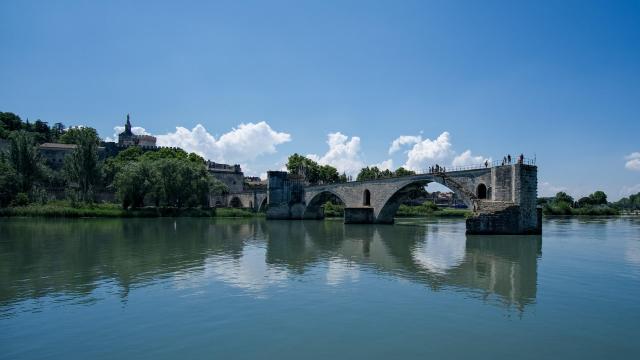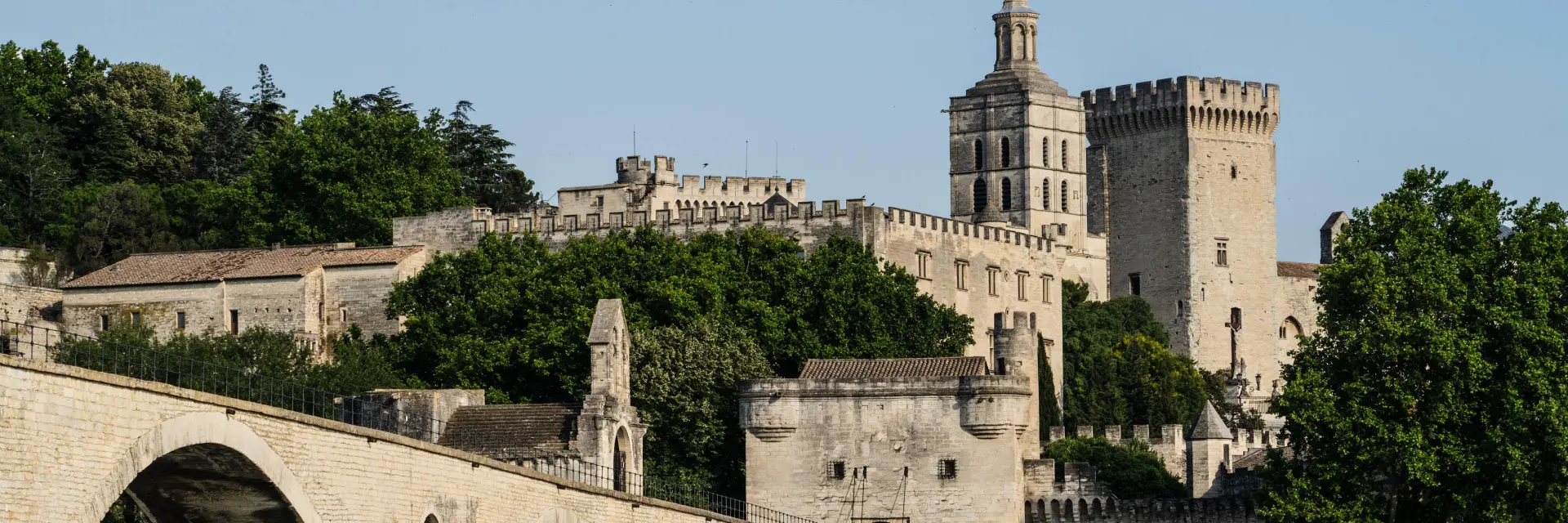
The Palais des Papes and Pont Saint Bénezet (or Pont d'Avignon) from Barthelasse island - Photo credit: Kos-Crea
©

The Palais des Papes and Pont Saint Bénezet (or Pont d'Avignon) from Barthelasse island - Photo credit: Kos-Crea

|

Kos-Crea

UNESCO’s heritage treasures

Avignon has been a UNESCO World Heritage Site since 1995 for its historic centre: the Palais des Papes, the Episcopal Complex and the Pont d’Avignon. This architectural ensemble bears witness to the major role played by the City of the Popes in the religious and political history of Europe in the 14th century. Turn the pages of this incredible history book.

The Palace of the Popes

An exceptional Gothic monument

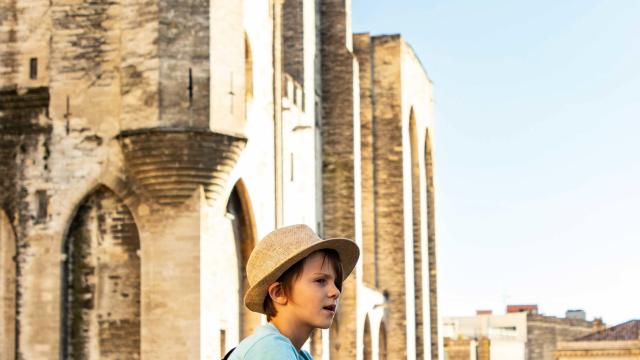
How did Avignon become the City of the Popes? To find out, head to the Palais des Papes, the city’s iconic monument and a testament to the establishment of the papacy in Avignon in the 14th century.

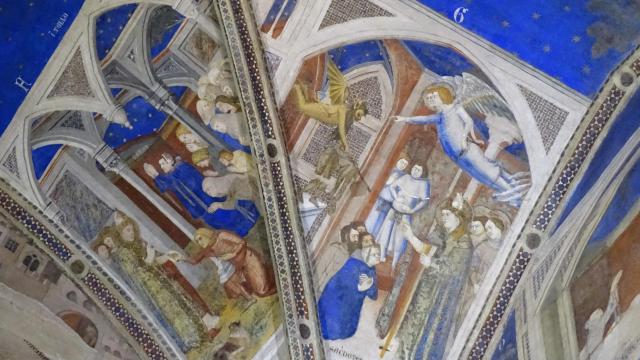
With its state rooms, cloisters, chapels and private apartments adorned with frescoes, the palace reveals the various facets of the former papal residence. Its monumental silhouette dominates the historic centre and serves as a reminder of the religious, political and artistic influence Avignon wielded in Europe at that time.

Today, the Palais des Papes can be explored via a visitor route enriched with new narratives and rooms open to the public since 1 May 2026.

The Bridge of Avignon (Saint-Bénezet Bridge)

A song and a legend that have stood the test of time

Pont Saint-Bénezet, better known as the ‘Pont d’Avignon’, is a true technical feat! Built from the 12th century onwards, it once linked the two banks of the Rhône. Steeped in legend and an iconic landmark of the region, only four of its original 22 arches remain today.

This architectural oddity, which has given rise to many questions and interpretations, each more fanciful than the last, has added to the aura of this bridge, famous throughout the world thanks to the song ‘Sur le Pont d’Avignon’. Although listed as a UNESCO World Heritage Site, you’re actually allowed to dance on it!

Open to visitors 7 days a week.

The Petit Palais – Louvre Museum in Avignon

A journey through medieval art

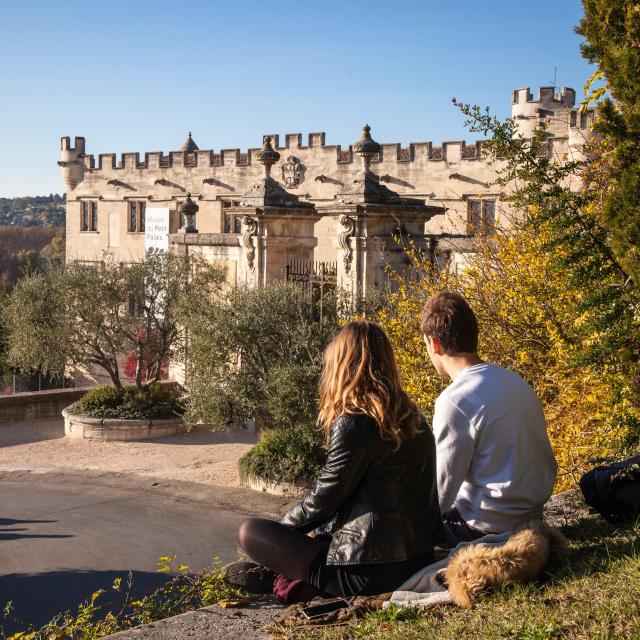
At the far end of the Place du Palais des Papes, the Petit Palais – Louvre in Avignon houses a remarkable collection of Italian paintings from the Middle Ages and the Renaissance, as well as medieval sculptures.

The building itself also has a history closely linked to that of Avignon. Originally the residence of Cardinal Arnaud de Via, nephew of Pope John XXII, it later became the palace of the Archbishop of Avignon before being rebuilt at the end of the 15th century by Julien de la Rovère, the future Pope Julius II.

Its collections include, in particular, over three hundred paintings by early Italian masters, works from the Avignon School and sculptures dating from the 12th to the 16th century from Avignon and the surrounding area.

Alongside the Palais des Papes and Notre-Dame-des-Doms Cathedral, the Petit Palais contributes to the richness of this monumental complex, which bears witness to Avignon’s place in medieval Europe.

The ramparts of Avignon

A town protected by its walls

In Avignon, living ‘intra-muros’ means living within the city walls. Stretching for around 4.3 kilometres, these walls still encircle the historic centre and form an instantly recognisable silhouette.

Construction began in 1355, during the pontificate of Innocent VI, and was completed in 1370, during that of Urban V. They bear witness to the importance of fortifications in the medieval city. They also helped to protect the inhabitants from flooding of the Rhône.

Today, the ramparts still define the landscape of Avignon. They offer a different perspective on the city, with its historic gates, towers, ancient streets and iconic monuments.

Notre-Dame-des-Doms

The cathedral that towers over Avignon

Next to the Palais des Papes, the Metropolitan Basilica of Notre-Dame-des-Doms overlooks the city from the Rocher des Doms. Built in the 12th century and subsequently remodelled in the 15th and 17th centuries, this Romanesque cathedral is particularly notable for its gilded lead statue of the Virgin Mary, which overlooks Avignon.

Its proximity to the Palais des Papes serves as a reminder of the Church’s central role in the city’s history. Together with the Petit Palais and the other monuments in the historic centre, it forms a remarkable architectural ensemble, recognised by UNESCO.

The Heritage of Provence

Provence World Heritage Banner

Discover the 8 heritage sites of Provence

Provence boasts a rich cultural and architectural heritage. From Avignon to the region’s other remarkable sites, monuments, historic complexes and artefacts from different eras tell the story of the lands and civilisations that shaped them. Set off to discover the eight heritage sites of Provence and continue your exploration of the region’s heritage.

Luberon Lavender Banner

Provence’s heritage can also be explored beyond Avignon

The history and landscapes of Provence are also revealed through day trips. Set off to explore the charming villages, historic sites and vineyards of the Rhône Valley to discover other facets of the region around Avignon.

Avignon City PassMake the most of the destination at an affordable price
Save up to €70.50 on the must-see attractions of the City of the Popes, and enjoy direct access to the museums and monuments of Avignon and Villeneuve-lès-Avignon, discounts on guided tours and when booking certain activities, as well as on your 24-hour or 48-hour parking pass!